A harness sounds like a simple purchase until you're standing in the aisle facing forty nearly identical options. Here's what actually matters, according to the people who fit them for a living, followed by five specific picks worth considering.
The Goodest Books is a participant in the Amazon Associates Program. As an Amazon Associate we earn from qualifying purchases, the links below are affiliate links, and buying through them helps us keep writing dog stories at no extra cost to you.
What to look for
Front-clip or back-clip. According to experts consulted by NBC Select, back-clip harnesses, where the leash attaches between the shoulder blades, tend to be more comfortable for dogs who already walk politely. Front-clip harnesses, with the leash attachment on the chest, work against a dog's natural instinct to pull against pressure, which makes them a better training tool for dogs who lunge or drag.
A proper fit. The standard rule, per veterinarian Dr. Abel Gonzalez, is that you should be able to fit two fingers comfortably between the straps and your dog's body. Look for a harness with an actual size guide from the manufacturer rather than a generic small/medium/large, and prioritize adjustability and padding at contact points.
Real materials. Certified trainer Robert Haussmann points out that a harness is functionally a seatbelt: you may not need its full strength on most walks, but you need it to hold on the day you do. Nylon, polyester, and neoprene are the materials worth looking for, and it's worth actually checking the stitching periodically rather than assuming it'll hold forever.
Ease of use day to day. Step-in designs, color-coded straps so you know which strap goes where, and machine-washability all sound like small conveniences until you're doing this twice a day in the rain.
What to watch out for
Too tight. Veterinarian Dr. Natalie Marks warns that an overly tight harness can cause real skin irritation and, worse, teach a dog to associate walks with discomfort, which can undo leash training rather than help it.
Too loose. Veterinary technician Alison Creighton notes the opposite failure mode: a loose harness can let a dog simply back out of it entirely, which matters most exactly when it matters most, a startled dog near traffic.
Front-clip tangling. Front-clip leashes can catch under a dog's legs if there's too much slack, and Haussmann notes the opposite problem exists too: too little slack can cause a dog to lean into the tension rather than away from it.
Sizing isn't standardized. A medium in one brand isn't necessarily a medium in another. Creighton's advice is to always measure your specific dog against that specific manufacturer's chart rather than assuming your dog's usual size carries over.
A harness that fights your training goal. A back-clip harness can inadvertently make pulling easier for a dog who hasn't learned leash manners yet, since it lets them lean their full weight forward. If you're actively working on loose-leash walking, a front-clip design is generally the better training tool, even if it takes some adjustment for both of you.
Five worth considering
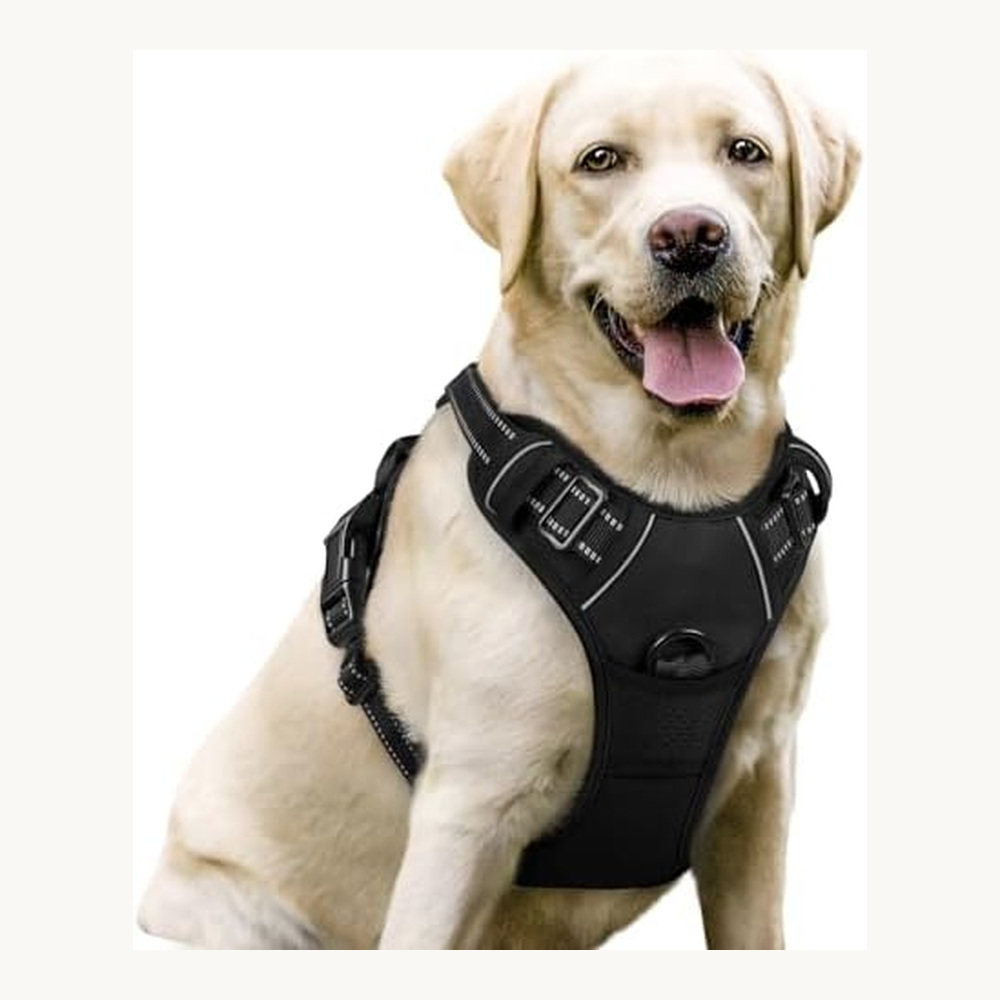 No. 01
Ruffwear Front Range Harness
Best for: everyday use, the safest default pick
Ruffwear's own best-selling harness, and it's not close: over 17,000 ratings on Amazon alone, averaging 4.7 to 4.8 stars. Padded chest plate, dual leash attachment points, and a reputation solid enough that multiple independent gear reviewers call it the one harness they'd recommend if they could only pick one.
Buy on Amazon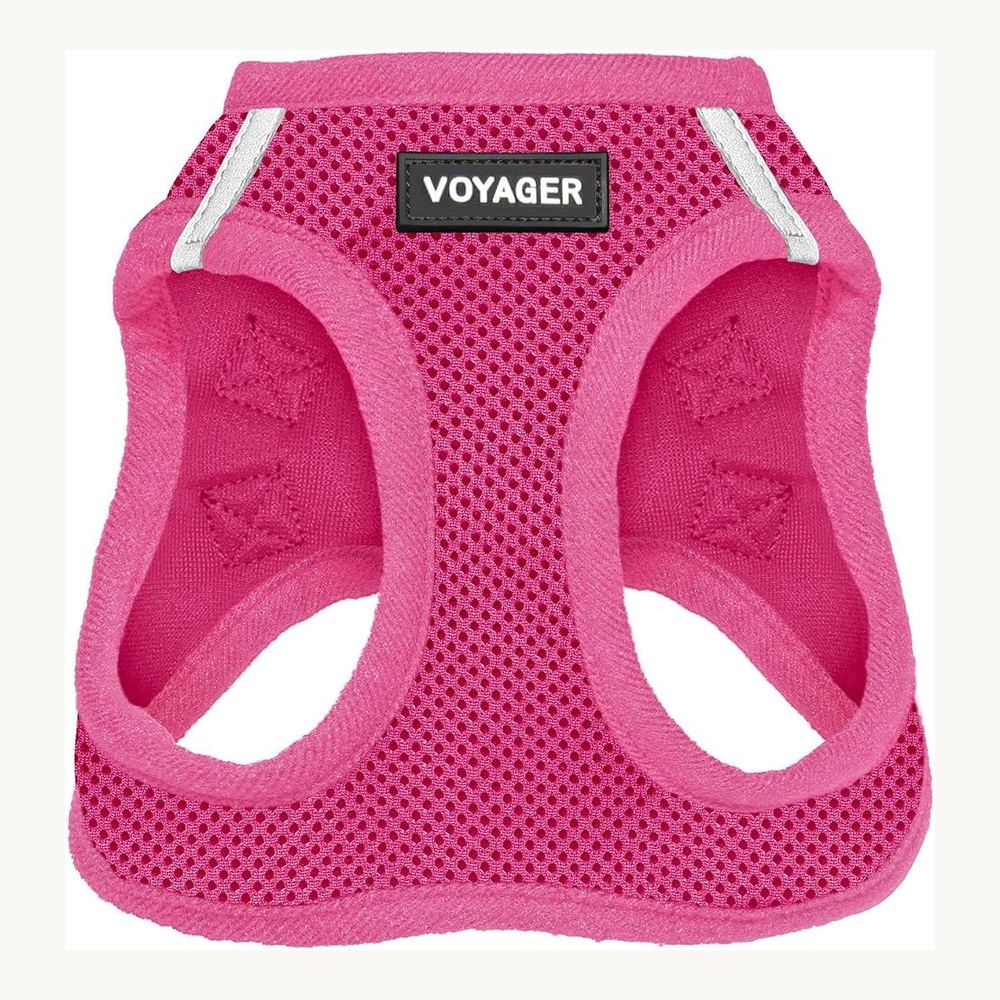 No. 02
Best Pet Supplies Voyager Step-In Air Harness
Best for: dogs who hate anything going over their head
Amazon's actual #1 best-selling harness, with close to 70,000 ratings averaging 4.6 stars. Your dog steps into it like a pair of pants rather than having it pulled overhead, a real difference for squirmy dogs or puppies still building trust around gear.
Buy on Amazon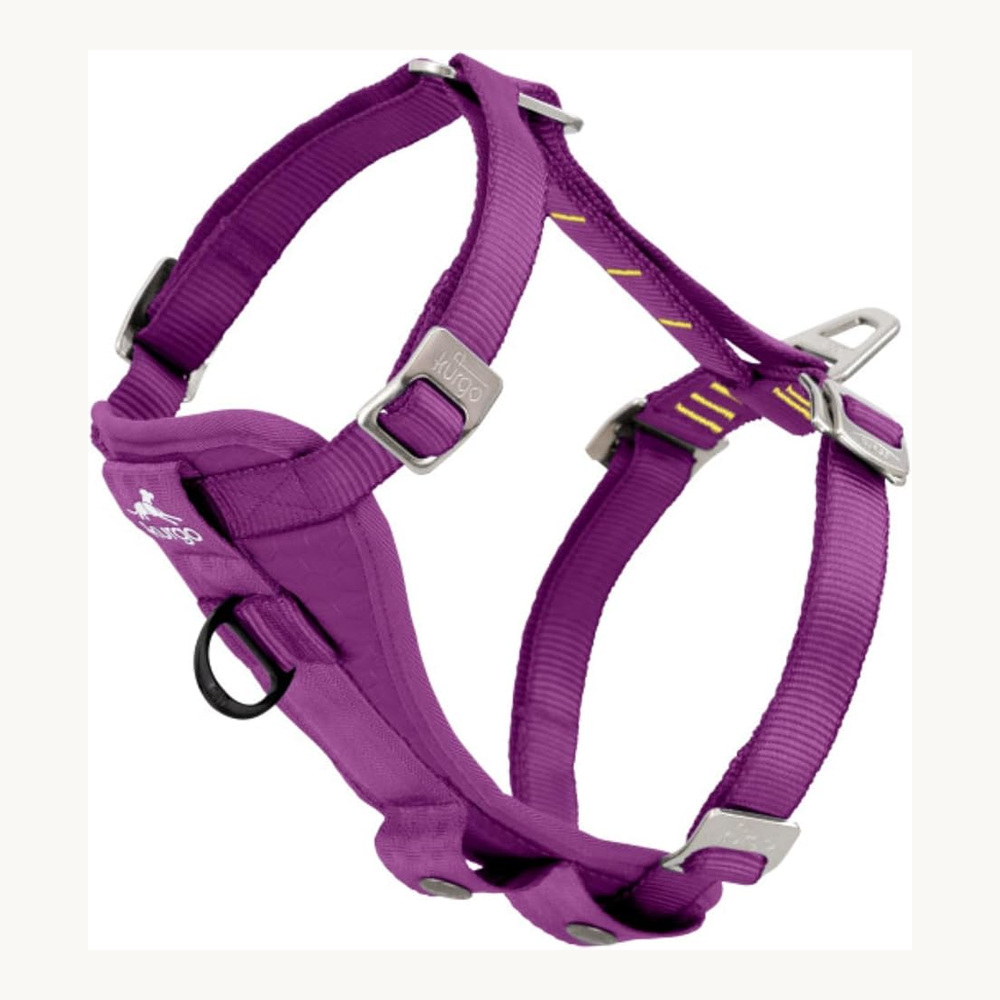 No. 03
Kurgo Tru-Fit Harness
Best for: car rides
Consistently rated 4.4 to 4.5 stars across hundreds of reviews. The only harness on this list actually crash-tested for vehicle safety, up to 75 pounds, and it doubles as a normal walking harness the rest of the time.
Buy on Amazon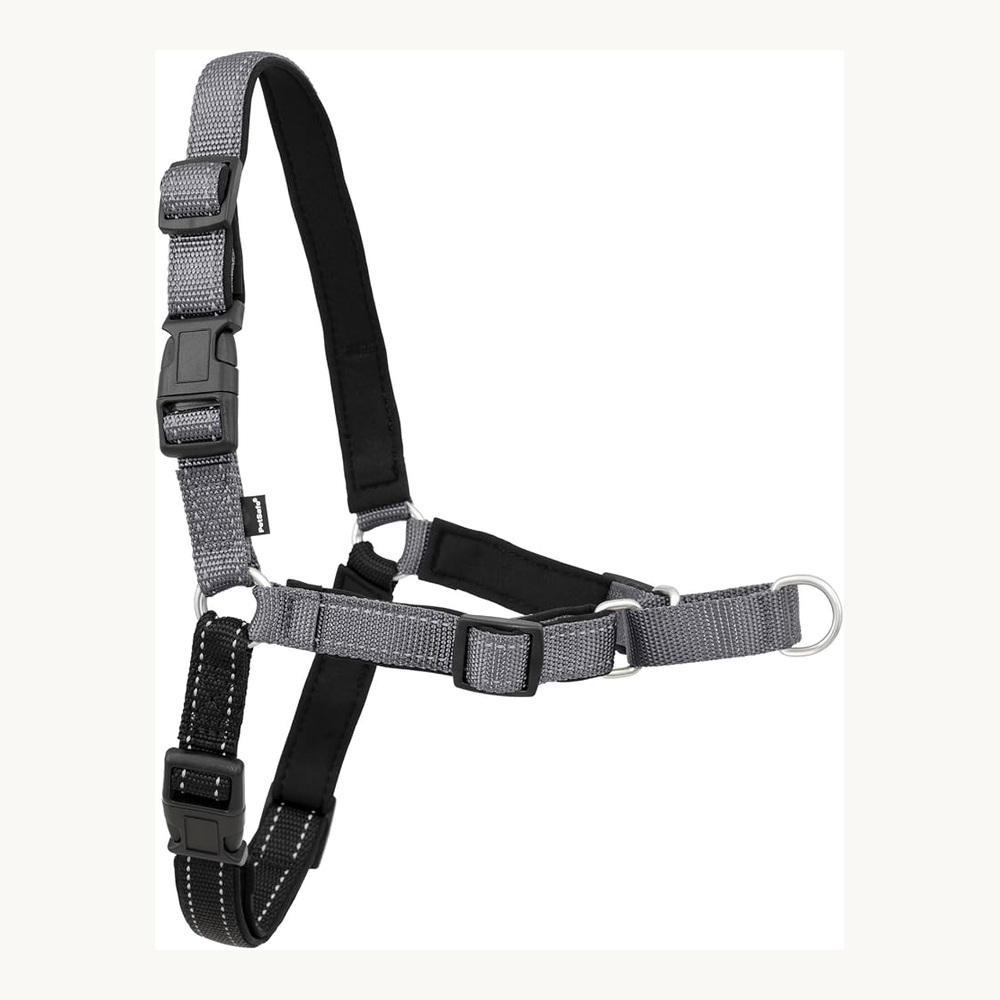 No. 04
PetSafe Deluxe Easy Walk Harness
Best for: an affordable, widely available no-pull option
The deluxe version of PetSafe's original patented front-clip no-pull design, first created by a veterinary behaviorist back in 2004, and still one of the most recognized harnesses out there. Worth considering the 2 Hounds Design pick below instead if your dog is a known chewer.
Buy on Amazon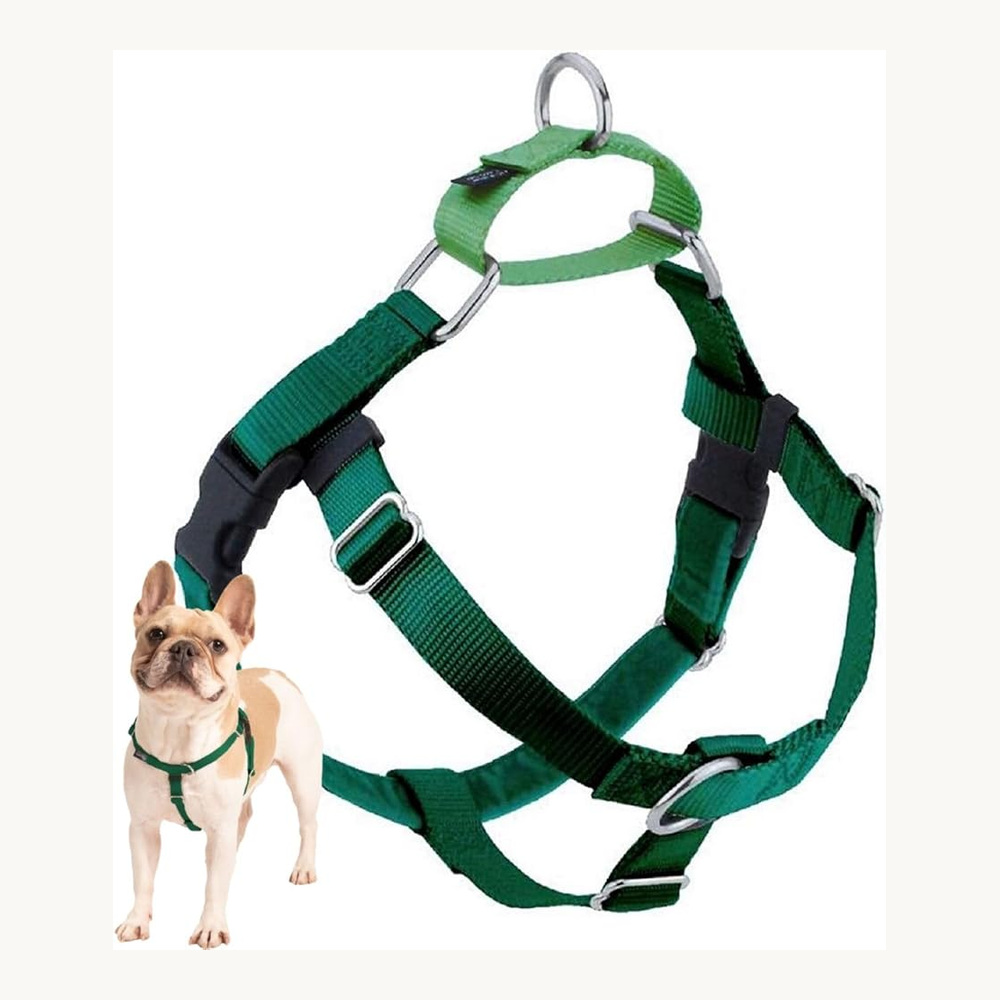 No. 05
2 Hounds Design Freedom Harness
Best for: strong dogs, serious training, and known chewers
Rated 4.8 stars, made in the USA, and the only harness on this list that comes with an actual chewing replacement warranty, a direct answer to the PetSafe harness's biggest weakness. A favorite among trainers working with larger or more determined dogs.
Buy on Amazon
A comfortable fit for the walk ahead
For more carefully chosen dog essentials, browse the best dog treats or find something thoughtful in our gifts for dog lovers.