Breeds & Behaviour

Do Dogs Really Love Us? What the Science Says

By I.L. Williams5 min read
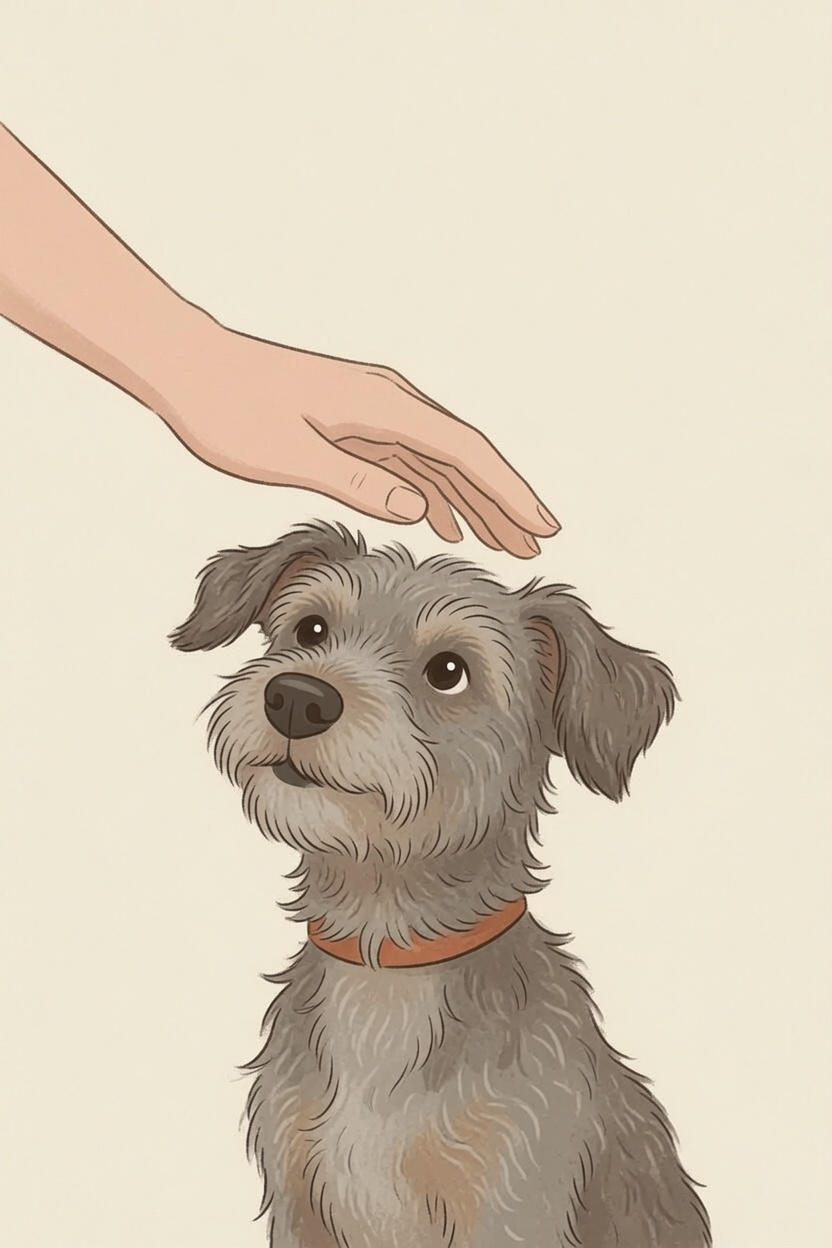
A dog gazing up at its owner as a hand reaches to pet it

Most dog owners feel sure of it, and others wonder about it. You look down at your dog asleep with her chin on your foot... and the question arrives unbidden: does she actually love me? Or is this beautiful, tail-thumping creature simply very pleased about the dinner and the walks and the warm spot by the fire? We call it love easily enough. But is it really there, on their side of it?

It turns out this is not only a sentimental question. It's one scientists have spent the last couple of decades genuinely trying to answer. And the evidence, while it can't hand us a signed confession, points more warmly than you might expect.

The love hormone goes both ways

The most-cited finding is also the loveliest. In 2015, a team led by Takefumi Nagasawa published a study in the journal Science showing that when dogs and their owners gaze into each other's eyes, both of them get a rise in oxytocin — the same bonding hormone that surges between a mother and her newborn. Crucially, it's a loop: the dog's gaze raises the human's oxytocin, the human's warmth raises the dog's, and round it goes. Wolves raised by humans don't do this. It appears to be something dogs evolved specifically for us — a biological handshake we don't share with any other species. When a dog holds your eyes across the room, that isn't idle staring. Something measurable is passing between you.

Their brains light up for us — sometimes more than for food

If hormones feel too abstract, there's harder evidence still. The neuroscientist Gregory Berns trained dogs to lie still, awake and unrestrained, inside an MRI scanner so he could watch their brains in real time. Two findings stand out. First, when dogs were given the scent of their own person (versus a stranger, or another dog), the reward center of their brain — the caudate nucleus — lit up distinctly. Your smell, specifically, registers as good news in there. And second, when Berns tested whether dogs preferred praise or food, most of the dogs' reward centers responded to their owner's praise at least as strongly as to a treat. A meaningful number responded more to the praise. Which is to say: for a lot of dogs, your approval isn't a poor substitute for a snack. It may be the better prize.

They treat us the way children treat a parent

There's a quieter line of research that is perhaps the most persuasive of all, because it's about behaviour rather than chemistry. Studies of what's called the "secure base effect" show that dogs use their owners much as small children use a parent: braver when you're in the room, more willing to explore and problem-solve, visibly reassured by your presence and unsettled by your absence. A dog with its person nearby is a more confident animal. That's not a creature merely tolerating the hand that feeds it. That's attachment, the same architecture of trust we recognise in our own families.

So, do they love us?

Here's the honest edge of it. Science is careful, and rightly so: we can't climb inside a dog's head and confirm they experience love the way we mean the word, with all its human concepts of memory and promise and choice. What the evidence can say is that dogs are wired to bond with us specifically, that our presence and voice and scent register in their brains and bodies as reward and safety, and that they seek out connection with us in ways their wild ancestors never did. Whether you call that "love" or something we don't yet have the instrument to measure, the machinery is unmistakably there, and it's pointed at us.

Which brings us back to that dog asleep on your foot. We can't prove what she feels in the way we'd prove it in a person. But we know that dogs are undone with joy when their person comes through the door, that a familiar smell means something to them that no other does, and that they are braver and easier with us in the room than without. The science won't quite let us use the word love without a footnote. It will, however, let us say that they are wired to bond with us above all else.


For more on the quiet things dogs do, see why your dog leans on you. And if you love a good dog story, here are the best dog books.

And for more like this — warm, useful, dog-obsessed — my newsletter The Goodest Place is where it all lands first.

Get new stories in your inbox.

Join readers who love dogs and a good story. New tales, behind-the-scenes notes, and the occasional very good boy — delivered free.