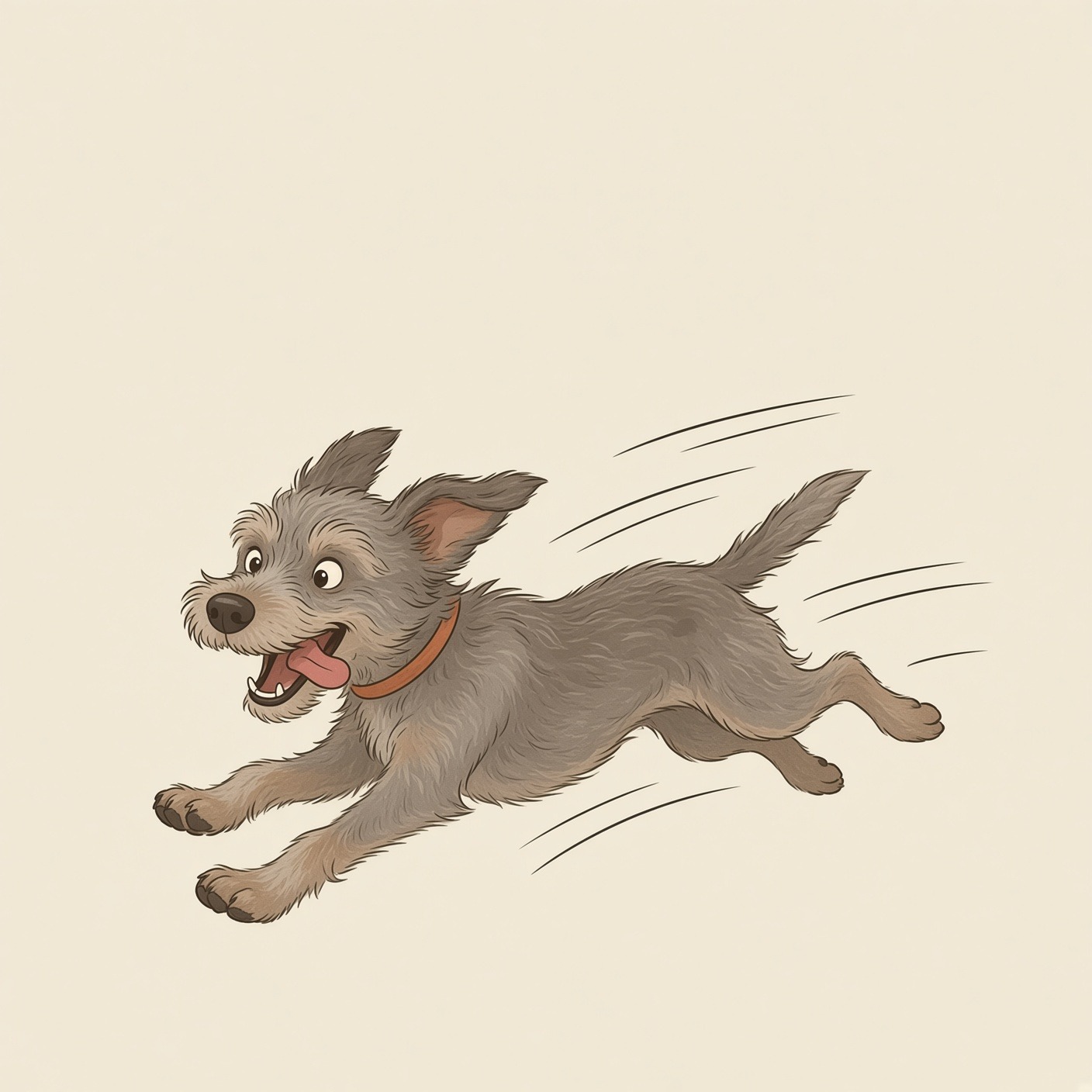
One second your dog is lying on the floor like a discarded rug. The next, they're airborne, tearing laps around the yard, taking the couch as a launch ramp, tucking their rear end and hurtling past you at a speed that seems physically unreasonable for something with that many legs. Then, just as suddenly, they flop down and go back to being a rug. If you've ever wondered whether this counts as normal dog behavior or a minor emergency: it's normal, and it even has an official name.
It's called a FRAP, and vets actually study it
So what actually causes it?
Here's the honest answer, straight from a Cornell veterinary behaviorist: there's no single confirmed cause. The leading theory is that it's a release valve: pent-up energy that's been building up, let loose all at once. A related theory suggests it can also be a way of shaking off stress, the way a dog might do a full-body shake after something unsettling happens.
Both theories might be true at once, and which one applies probably depends on the dog and the moment. Live Science quotes the American Veterinary Medical Association's José Arce with the simplest possible explanation: mostly, they're just having fun.
A few patterns show up often enough to be worth naming, even without a confirmed mechanism behind them: right after a bath, after a long stretch of being cooped up indoors, and in the evening, which earns zoomies the nickname "midnight madness" in some circles.
It fades with age, mostly
One small comfort
Next time your dog goes from zero to sixty for no visible reason, you can skip the concerned Google search. It's not a crisis. It's just a FRAP, and near as anyone can tell, probably a good time.
For more on what dogs are telling us, see whether dogs laugh and why they do that.
And for more like this (warm, useful, dog-obsessed), visit my newsletter The Goodest Place is where it all lands first.