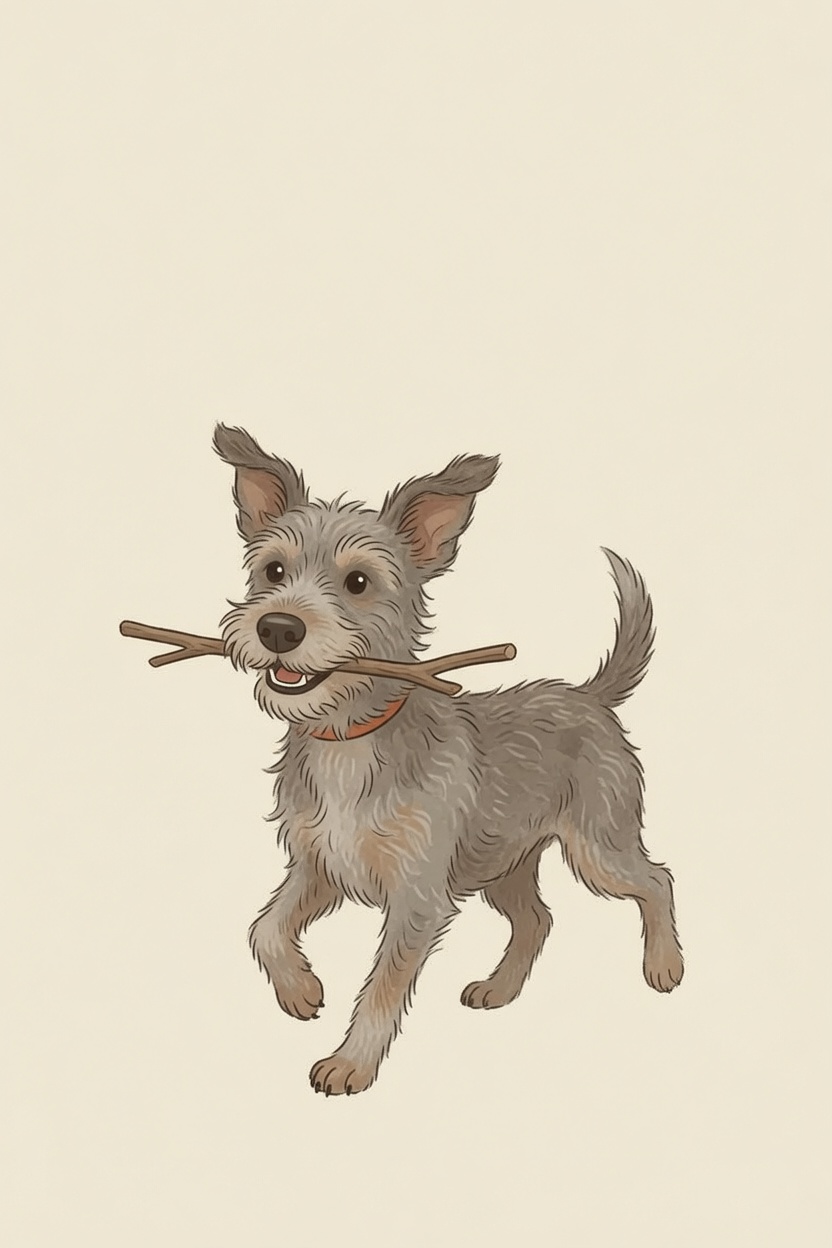
There is a condition that comes over my dog, and we have given it a name. We call it "Stick Madness", and we speak of it the way you'd speak of a mild but incurable disease.
It arrives the instant a stick appears. Mocca (half border collie, half water dog), is normally a reasonably sensible animal, but she instantly undergoes a complete personality collapse.
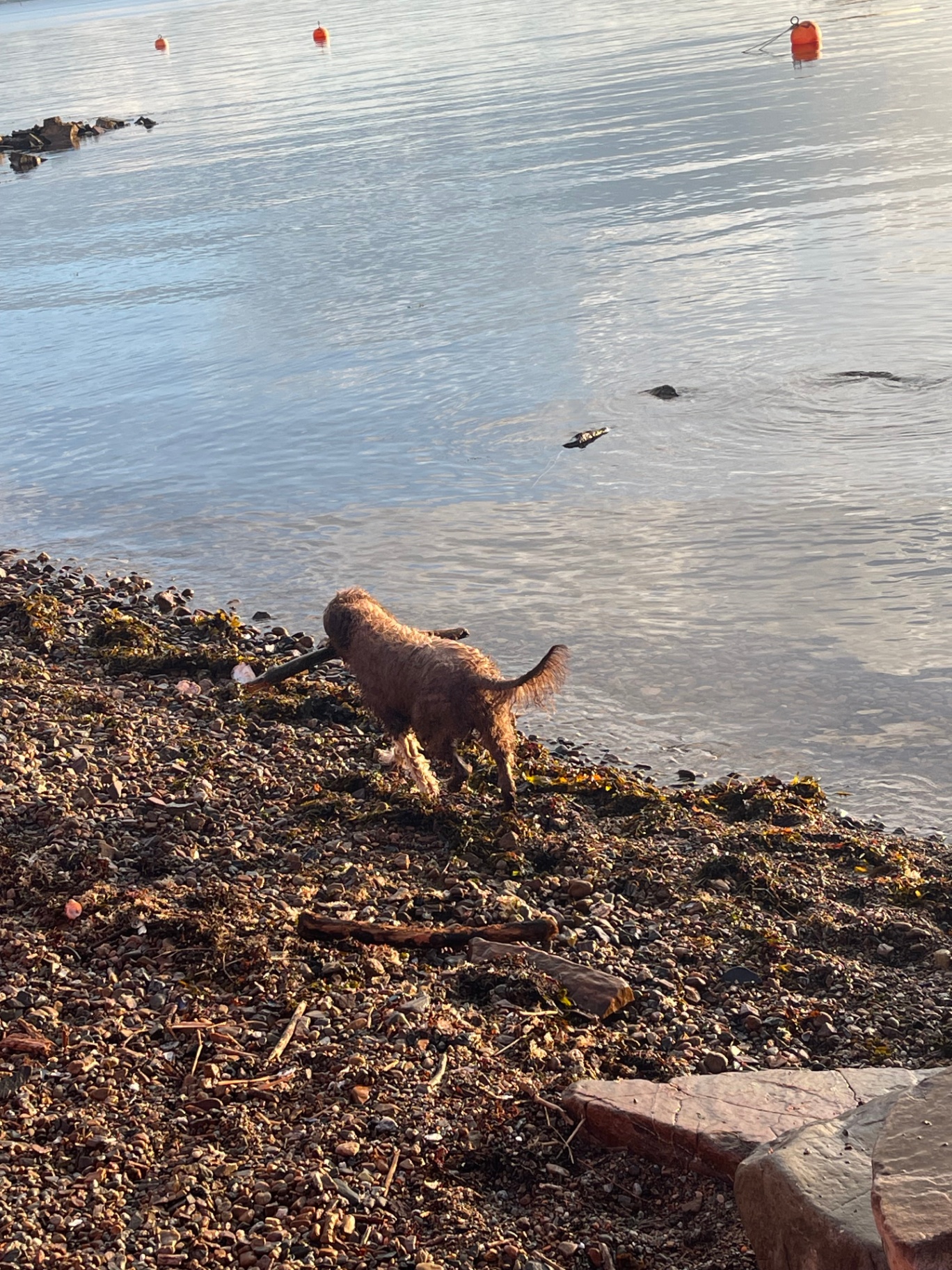
We throw the stick out into the fjord and she loses her mind entirely: barking, insane with excitement, hurling herself into the water and swimming out against the waves with a single-minded determination that would be genuinely moving if the object of it were not just a wet piece of birch. She brings it back to the beach and then, rather than dropping it, runs the length of the shoreline with it held high, showing it to no one, as though it were a trophy that must be paraded. In the grip of this disease she can barely hear us. She cannot understand simple words she has known for years. There is no common sense, no dinner, no owner, no shame. There is only the stick.
I have spent a fair amount of time watching this and wondering what exactly is going on in that fuzzy little head. So I looked into it. It turns out stick madness, while not a recognized medical condition, is real. And it has some reasons behind it. More of them than you'd think.

Some dogs were built for it
It's an old, old instinct
A stick is a feast for the senses
And they're everywhere, and free
A word about safety, because sticks aren't entirely innocent
Much as it pains me to interrupt the romance of stick madness, this is the part worth taking seriously. Vets' single biggest concern isn't chewing — it's throwing. A thrown stick can land point-down in the ground, and a dog racing in with an open mouth can run straight onto it, driving splinters into the throat or soft tissue. These injuries are nasty and hard to treat, and they're the reason many vets quietly wish we'd stop throwing sticks altogether. Beyond that: splinters can cut the mouth, swallowed pieces can choke or cause blockages, hard wood can crack teeth, and some trees (cherry, walnut, oak, yew among them) are actually toxic to dogs.
None of which has stopped us throwing sticks into the fjord for Mocca, if I'm honest. But we throw them out over open water rather than hard ground, we keep an eye on what she's chewing, and we don't let her turn a swim into a snack for long. If your dog is a serious chewer or swallower, a rubber stick or a proper fetch toy gives them the whole glorious game with none of the emergency vet bill.
So that's stick madness, explained. Or at least as explained as a thing like this can be. It's breeding and instinct and scent and the simple abundance of the natural world, all firing in their heads the moment a stick appears.
But watching Mocca haul her dripping wooden prize up the beach for the fortieth time, tail going like a metronome, deaf to everything, I think the real answer is even simpler. She loves sticks because loving things completely, without reservation or dignity, is one of the things dogs do best. We should all be so lucky as to find so much joy in a stick of our own.
For more on the quiet things dogs do, see why your dog leans on you, or whether do dogs really love us, or why dogs take so long to pee. And if you love a good dog story, here are the best dog books.
And for more like this — warm, useful, dog-obsessed — my newsletter The Goodest Place is where it all lands first.