There is nothing quite like the day you bring a rescue or foster dog home. You've been counting down to it, and you arrive full of love, ready to spoil them, ready for them to understand at once that they're finally safe. And then, very often, the dog walks in, takes one look at their wonderful new life, and hides behind the sofa.
This is normal. In fact, it's healthy. Because from your new dog's point of view, their entire world has just been upended, again, and they have no way of knowing yet that this time it's for good or even for their good. The single most useful thing you can do in those first days is to resist the urge to overwhelm them with affection, and instead give them what they actually need: space, calm, and time to feel safe. This guide is about exactly that, how to help a rescue or foster dog settle in and understand that they're finally home.
Understand the timeline: the 3-3-3 rule
Rescue organisations often talk about the "3-3-3 rule," and it's a genuinely useful way to set your expectations. Roughly speaking: the first 3 days are for decompression, the first 3 weeks for learning your routines, and the first 3 months for truly settling in and letting their real personality emerge. It's a rule of thumb, not a schedule, some dogs need far longer, especially if they've had a hard start, and that's completely fine. But knowing the shape of it helps enormously. When your new dog is quiet, hiding, or off their food in the first days, you'll understand that they're not unhappy with you. They're just decompressing, exactly on time.
Give them a safe place that is entirely their own
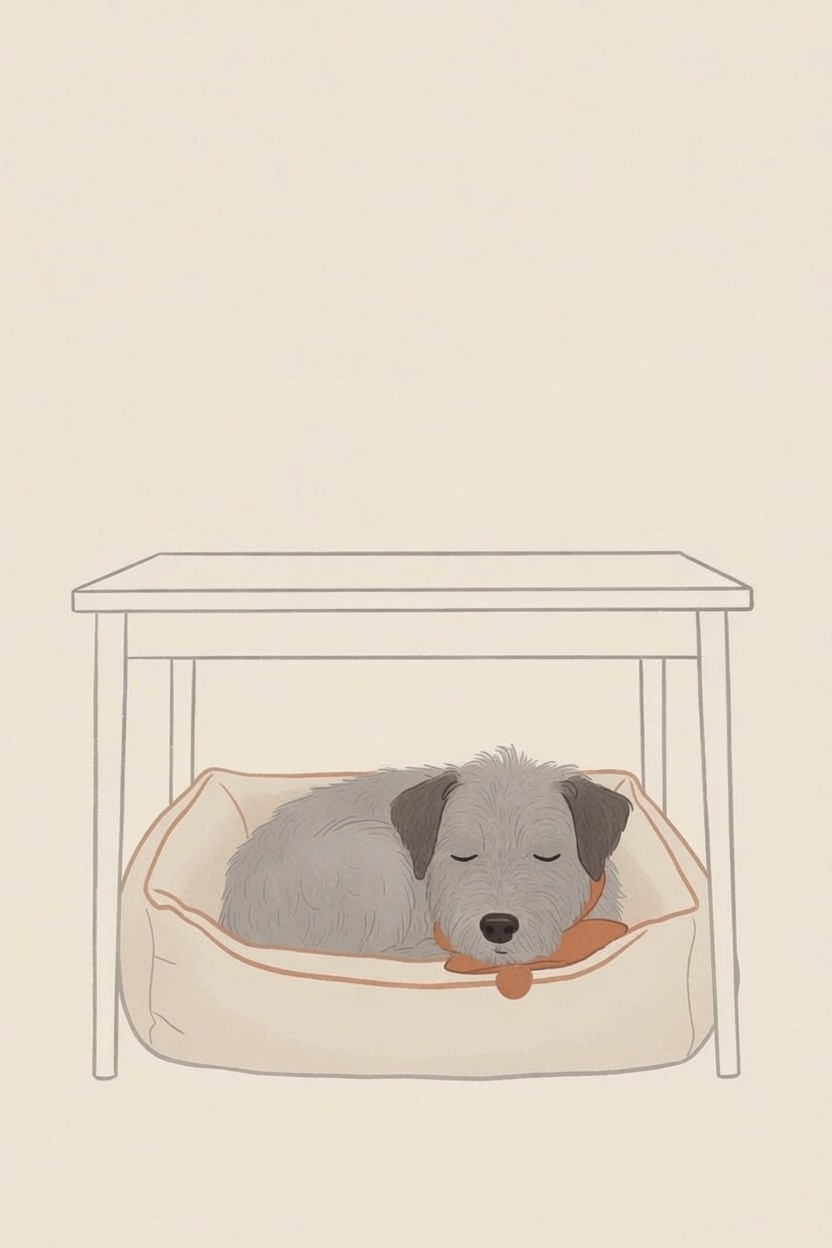
This is the most important thing you can provide, and it's worth setting up before the dog even arrives. Your new dog needs one spot that is unmistakably theirs, a place they can retreat to and never be bothered in. For most dogs this is a crate or a cosy dog bed tucked into a quiet corner, away from the front door and the busiest foot traffic. Make it comfortable and covered or semi-enclosed, so it feels like a den rather than a display. The rule for this space is simple and absolute: when the dog is in it, everyone leaves them alone. Children especially need to understand this. A dog who knows they have one safe retreat where nothing bad ever happens will settle far faster than one who feels watched everywhere. This is their anchor.
Their own bowls, their own food, their own routine
Give your dog their own feeding station, a set of bowls in a consistent, low-traffic spot, and feed them at the same times each day. This matters more than it sounds. Predictability is deeply reassuring to a dog who has just lost every routine they knew, and mealtimes at fixed hours are one of the fastest ways to build a sense of "this is how life works here now." If you can find out what food they were eating at the shelter or foster home, start with that and change it gradually; a new home and a new diet at once is a lot for one small stomach. Fresh water always available, in the same place. Small, dull consistencies like these are the scaffolding a dog rebuilds their security on.
Their own toys and comforts
A couple of toys that belong just to them, and something soft to sleep with, help a new dog feel that this place holds good things meant for them. You don't need much, a chew, a soft toy, perhaps a snuffle mat or puzzle feeder for gentle enrichment once they've begun to relax. If the shelter or foster can give you a blanket or toy that already carries familiar scents, even better; a scrap of the familiar in an unfamiliar world is a genuine comfort. Let the dog discover these things in their own time rather than presenting them all at once.
Those first days: be calm, be boring, be patient
Here is the advice that surprises most new adopters and foster carers: in the first few days, do less, not more. Keep the house quiet. Hold off on the welcome party, the trip to the pet shop, the meeting with every friend and relative, all of that can wait. Let your dog explore at their own pace and come to you rather than being reached for. Sit quietly in the same room, reading or working, and simply let them get used to your presence with no pressure. Keep hellos and goodbyes low-key, oddly, big emotional greetings tend to increase a dog's anxiety rather than soothe it. Watch for the small signs of a dog beginning to relax: eating a full meal, choosing to lie down and rest, a loose wag, a moment of eye contact. These little things are the real milestones, and they're worth more than any trick.
Introductions: slow is kind
If you have other pets, children, or a busy household, introduce your new dog to it all gradually rather than all at once. With other dogs, first meetings on neutral ground and separate spaces at home (many rescues advise "crate and rotate" for the first couple of weeks) prevent the tension that can sour a relationship before it starts. With people, let the dog approach in their own time; don't crowd them, and teach children to be gentle and to respect the dog's safe space. Every calm, unforced introduction is a small deposit in the bank of trust you're building.
Where to find more help
You don't have to do this alone, and you shouldn't have to. If you'd like deeper, expert guidance, the ASPCA offers excellent free resources on adopting and settling a new dog, from the first days through training and behaviour. It's a trustworthy place to turn when you have a specific worry, and well worth bookmarking. And never hesitate to contact the shelter or rescue you adopted or fostered from, a good organisation genuinely wants to help their dogs succeed, and most are glad to offer advice long after the dog goes home.
And then, time
The thing no product and no guide can give your dog is the one thing they most need: time, and the steady proof that this home is safe. Somewhere around the three-month mark, most rescue and foster dogs begin to truly relax into themselves, and you'll start to meet the real dog, the one who was there all along, waiting to feel safe enough to appear. It is one of the great quiet joys of opening your home to a dog: the day you realise the frightened animal who hid behind your sofa has become a dog who is, unmistakably, at home.
Be patient, be calm, give them their own safe corner of the world, and let them arrive in their own time.
The Essentials: Setting Up Their Safe Space
A few basics make settling in easier — here's what I'd have ready before your new dog arrives.
A crate or cosy dog bed
their safe den

EHEYCIGA orthopedic bolster bed
View on Amazon
Bedsure calming donut bed
View on Amazon
Food and water bowls
a feeding station of their own

Foldable elevated stainless steel stand
View on Amazon
The Coldest insulated dog bowl
View on Amazon
A snuffle mat or puzzle feeder
gentle enrichment for when they relax
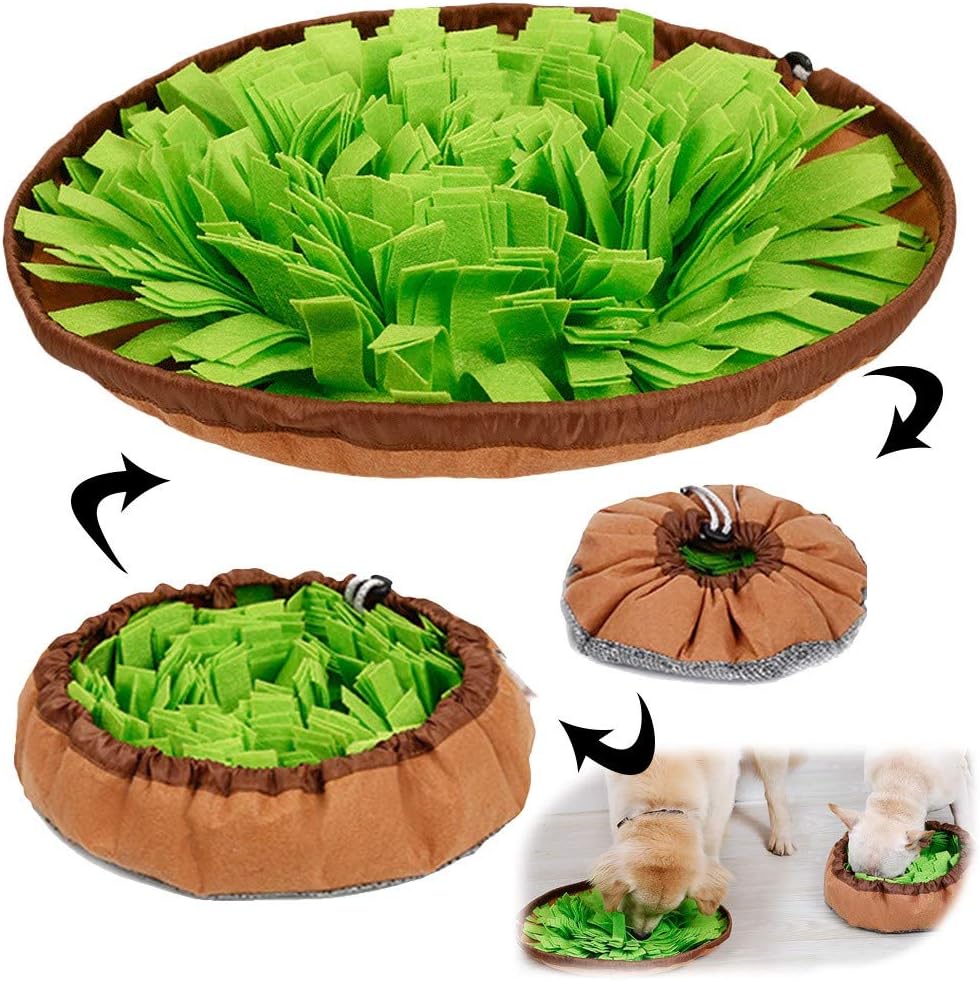
NEEDOON snuffle mat
View on Amazon
Outward Hound Slo-Bowl slow feeder
View on Amazon
Feedoo double-layer puzzle feeder
View on Amazon
A soft toy
something of their own to sleep beside
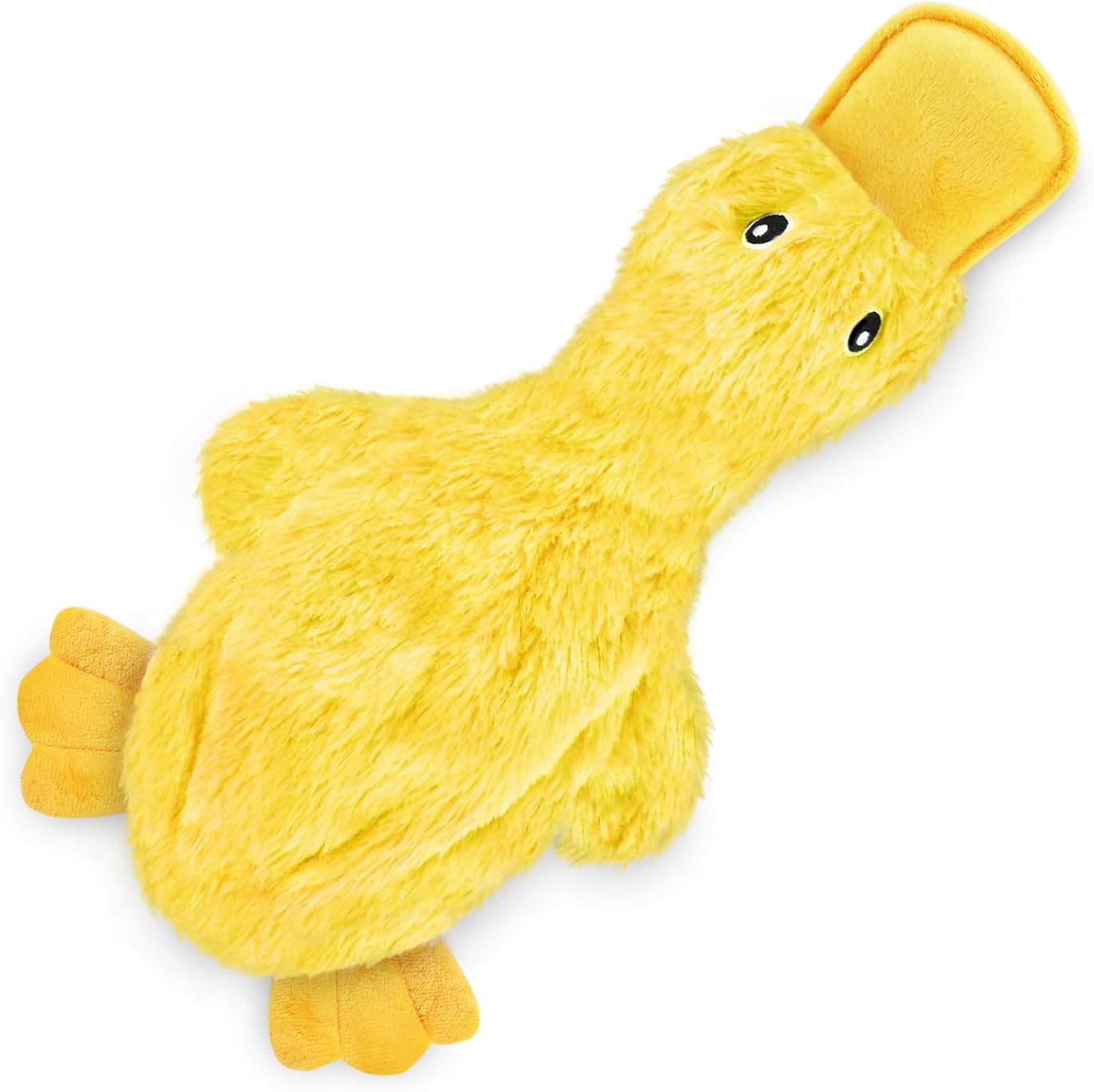
Best Pet Supplies stuffing-free squeaker
View on Amazon
Multipet Lamb Chop plush
View on Amazon
A chew
a quiet, settling comfort

Benebone Wishbone chew
View on Amazon
Jeefome tough chew toy
View on Amazon
The Goodest Books is a participant in the Amazon Associates Program. As an Amazon Associate we earn from qualifying purchases — some links above are affiliate links, and buying through them helps us keep writing dog stories at no extra cost to you.
For more on the quiet things dogs do, see why your dog leans on you. And if you love a good dog story, here are the best dog books.