Autumn is the season when some dogs notice the change before their people do. The mornings cool, the wind picks up, and a short-coated dog who was fine in September starts to walk with a hunch. This is not a guide to winter coats. It is about the in-between weeks, when a light layer is enough, and about telling which dogs need one and which are better off without.
The Goodest Books is a participant in the Amazon Associates Program. As an Amazon Associate we earn from qualifying purchases. The links below are affiliate links, and buying through them helps us keep writing dog stories at no extra cost to you.
Does your dog need one?
Not every dog does, and the answer depends on the dog more than the calendar. Most published advice is written with winter in mind, so treat what follows as a guide to which dogs feel the cold first. Those are the dogs likely to want a layer in autumn.
Dogs that tend to get cold first
- Small and toy breeds. The AKC notes that small dogs have a harder time holding on to body heat.
- Short-coated or lean dogs. Rover's veterinary sources name Chihuahuas, Boxers and Pugs among short or sparse coats, and skinny dogs like Greyhounds and Whippets. PetMD adds that some large short-haired dogs, including Great Danes and some pit bull types, may benefit too.
- Low-to-the-ground dogs. Dachshunds and Basset Hounds are the usual examples, because their bellies get wet and cold. The AKC says even thick-coated Corgis can benefit for the same reason.
- Hairless and clipped dogs. Chinese Cresteds, Xoloitzcuintli and American Hairless Terriers, along with Poodles who are kept clipped, have little natural insulation, according to the AKC.
- Puppies, seniors and dogs with health conditions. The AKC says young puppies and senior dogs feel the cold more than healthy adults, as can dogs with arthritis. Rover's sources add conditions like hypothyroidism and diabetes. If you are unsure, ask your vet.
Dogs that usually do not
Double-coated northern breeds such as Siberian Huskies, Alaskan Malamutes, Newfoundlands and Chow Chows were built for cold, and Small Door Veterinary notes they are largely unaffected by it. Saint Bernards and Akitas belong in the same group, according to Rover and Dogster. DogHealth.com warns that these dogs can overheat if you put clothes on them, and that matters more in autumn than in deep winter. More generally, Rover's veterinarian says most large dogs with normal to thick coats do not need one unless it is very cold or wet, or they are outside for a long time.
For a heavily coated dog, a light rain shell may be the better purchase. Its job is to keep the coat from getting soaked, not to add warmth.
Sweater or jacket?
It is not always one or the other. PetMD quotes a veterinarian who says her muscular French Bulldog is comfortable in a sweater and does not need a thick jacket, while a Chinese Crested needs a heavy one. A Shih Tzu may only need a sweater, depending on coat length.
How to tell if your dog is cold
Your dog cannot say so, which means looking for a pattern. Veterinary sources describe much the same set of signs.
Posture and behavior. Zoetis Petcare lists shivering, curling into a ball, hunching and whining. A hunched back and tucked tail help a dog hold in heat. PetMD's veterinarians add that some dogs lift their paws off the ground or simply refuse to keep walking. Others slow down, look for a warm spot, or press against you.
What you can feel. Some veterinary guides suggest gently touching the ear tips, paw pads and base of the tail, which tend to feel cool when a dog is chilled (Webvet). Treat that as one clue alongside behavior, not a test on its own.
Whether it settles once your dog is warm. The same Webvet guide makes a useful distinction. Shivering from cold eases within minutes once a dog is dry and warm. Shivering that carries on indoors, or comes with panting, vomiting, lethargy or not eating, is not a temperature response, and is worth a call to your vet. It also notes that a small dog shivering in a comfortably cool house is often simply cold.
A gentle way to check. If you are unsure, try a light layer on a few cool walks and see what changes. A dog who stops shivering, keeps a normal pace and stays willing to walk was probably cold. Give a new coat a few short sessions before deciding your dog dislikes it.
When it is more than chilly. Cold in autumn is rarely dangerous, but Chewy's veterinarian-reviewed guide says severe shivering, weakness, confusion, collapse, or a dog who does not warm up after coming indoors should be seen by a vet right away.
And when the answer is no. Small Door Veterinary adds that a coat should not be forced on a dog who dislikes it, and that coats do not belong on mild days or indoors.
How your dog's needs change with age
Cold tolerance is not fixed. It shifts across a dog's life, and the dog who needed nothing at three may want a layer at twelve.
Puppies. The AKC says young puppies are more susceptible to cold than healthy adult dogs, and Small Door Veterinary groups them with the dogs that generally need a coat sooner. They also grow quickly, so a size that fits in September may not in November.
Adult dogs. In adulthood, coat, size and body condition decide most of it, but adult needs can still change. A dog who has just been clipped loses insulation, as the AKC notes for Poodles and other clipped breeds. Health conditions can lower tolerance too. Rover's veterinary sources mention hypothyroidism and diabetes, and DogHealth.com adds cancer and heart problems. If your dog suddenly seems colder than usual, it is worth raising with your vet.
Senior dogs. Veterinary clinics describe a consistent set of changes. Coronado Veterinary Hospital lists reduced muscle mass, joint stiffness and a slower metabolism, which together make it harder for older pets to regulate their body temperature. VEG ER for Pets adds that in arthritic dogs, cold thickens the fluid in the joints and tightens the muscles around them, which increases stiffness and pain. Muscle produces heat, so less muscle means less warmth to hold on to.
That is why a senior dog may start hesitating at the door, moving more slowly in the morning, or shivering on walks that never bothered them before. These changes have several possible causes, and cold can be one of them, so it is worth mentioning to your vet before assuming it is simply age. For a stiff dog, a coat that goes on with as little lifting and twisting as possible matters more than it does for a young one.
How to choose
Match the layer to the weather. Fleece and knit sweaters suit cool, dry days. A light jacket adds wind and damp protection. A waterproof shell is for rain, and most are not insulated. Treeline Review, a trainer-led gear site, points out that layering several coats can restrict an active dog and is best kept for calm, leashed walks.
Measure, do not guess. Sizing is not standard across brands. Treeline recommends measuring the back from between the shoulder blades to the base of the tail, plus the widest part of the chest and the neck. If a coat's back length and chest measurements do not both suit your dog, try another brand. Long-bodied dogs and deep-chested dogs are the ones most often caught out.
Check the coverage. Chest and belly coverage helps small dogs and low-to-the-ground breeds. The catch, per Treeline, is that male dogs can pee on full-coverage coats if they fit loosely, so a snug belly fit matters.
Look for harness access. If your dog walks in a harness, look for a leash portal or zipper opening. Treeline considers a harness opening more important than a collar hole.
Think about getting it on. Some coats go over the head. Others step in or close with hook-and-loop tabs. Dogs who dislike things over their heads do better with the last two. On raincoats, Treeline also advises skipping hoods, which many dogs dislike because they cover the eyes.
Introduce it slowly. Let your dog wear the coat for a short time indoors first, with a treat, then build up to a walk.
What to watch for
- Overheating. Especially on double-coated or very active dogs on a mild day. Take the layer off when you are done walking.
- A poor fit at the neck or legs. Too tight is uncomfortable and too loose twists or slips.
- Wet fabric. Treeline notes that dogs with little body fat can get cold quickly in rain, and that keeping them dry is the best way to keep them warm.
- Growth. Puppies outgrow sizes quickly.
- Being out of sight. Stay with your dog outdoors so you can notice if they seem too cold or too warm.
Eight worth considering
They run from the lightest layers to the warmest and wettest-weather pieces.
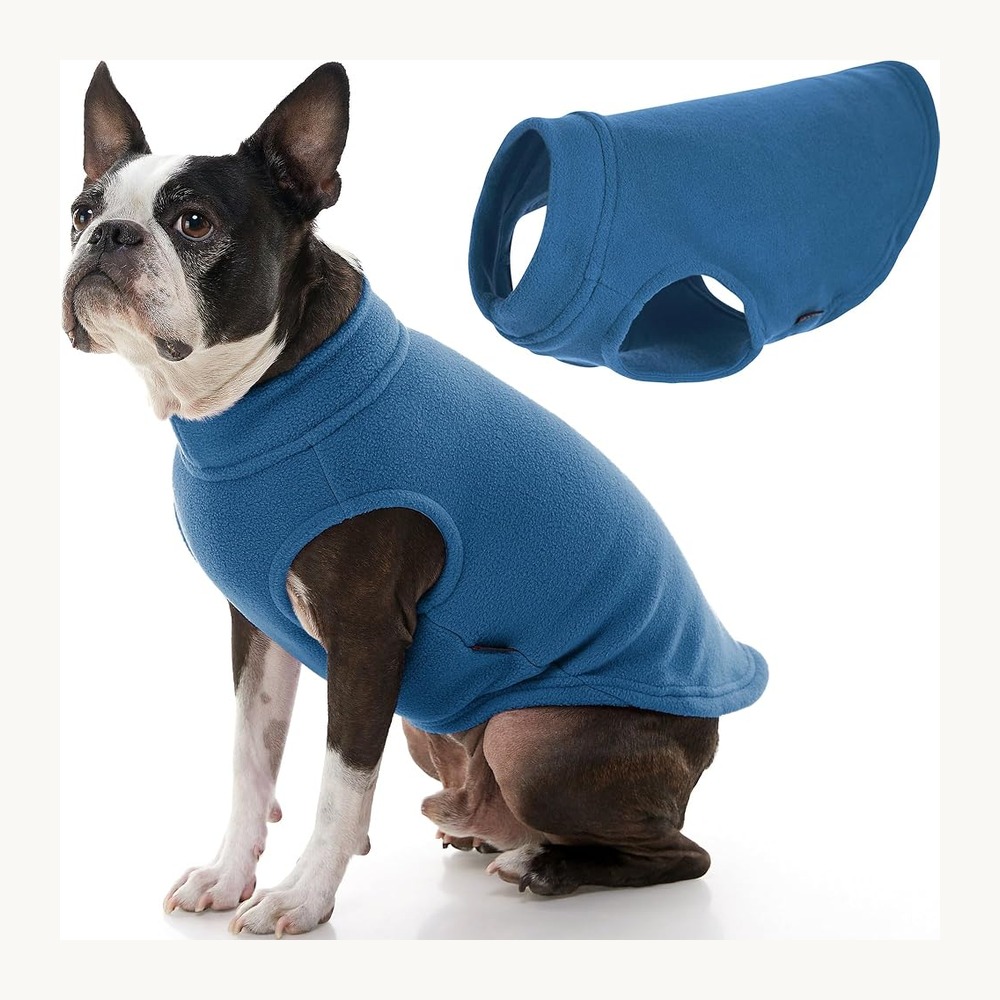 No. 01
Gooby Stretch Fleece Vest
Best for: short-coated dogs of almost any size, and dogs between sizes
A pullover with no zippers, made of stretch fleece. The maker offers sizes from tiny dogs to well over 100 pounds, which is unusual. It is rated about 4.8 stars on Chewy and 4.7 on Walmart, and versions of it appear on Amazon's best-selling dog sweaters list. Some owners report the neck opening stretching over time, and a few say the fit is tight on barrel-chested dogs, so go by the chest measurement, not the weight guide.
Buy on Amazon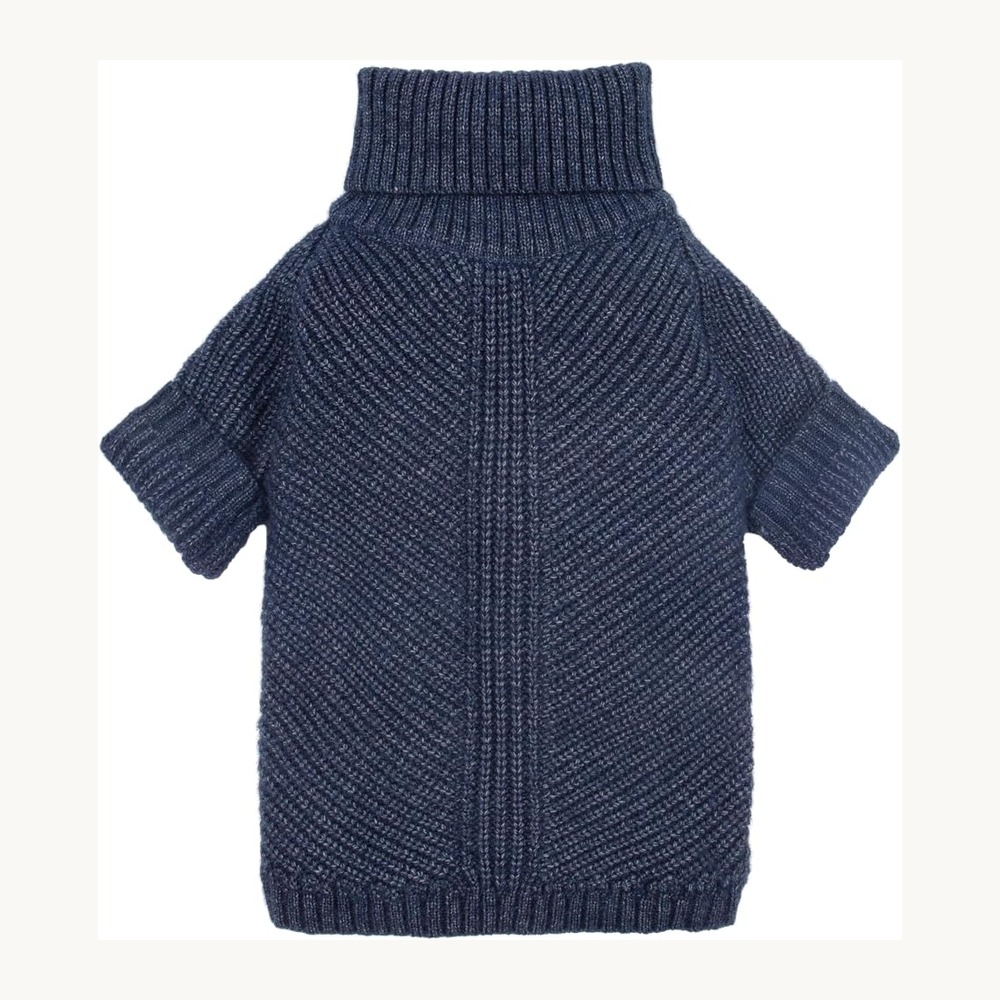 No. 02
Fitwarm Turtleneck Knit Dog Sweater
Best for: small dogs on cool, dry days
A knit turtleneck sweater with a soft collar, sold and shipped by Fitwarm through Amazon. Reviewers describe repeat purchases for hairless and lean dogs, including a Xoloitzcuintli and a Whippet. Some say it runs small and that the knit is less stretchy than they hoped, so consider sizing up if your dog is between sizes.
Buy on Amazon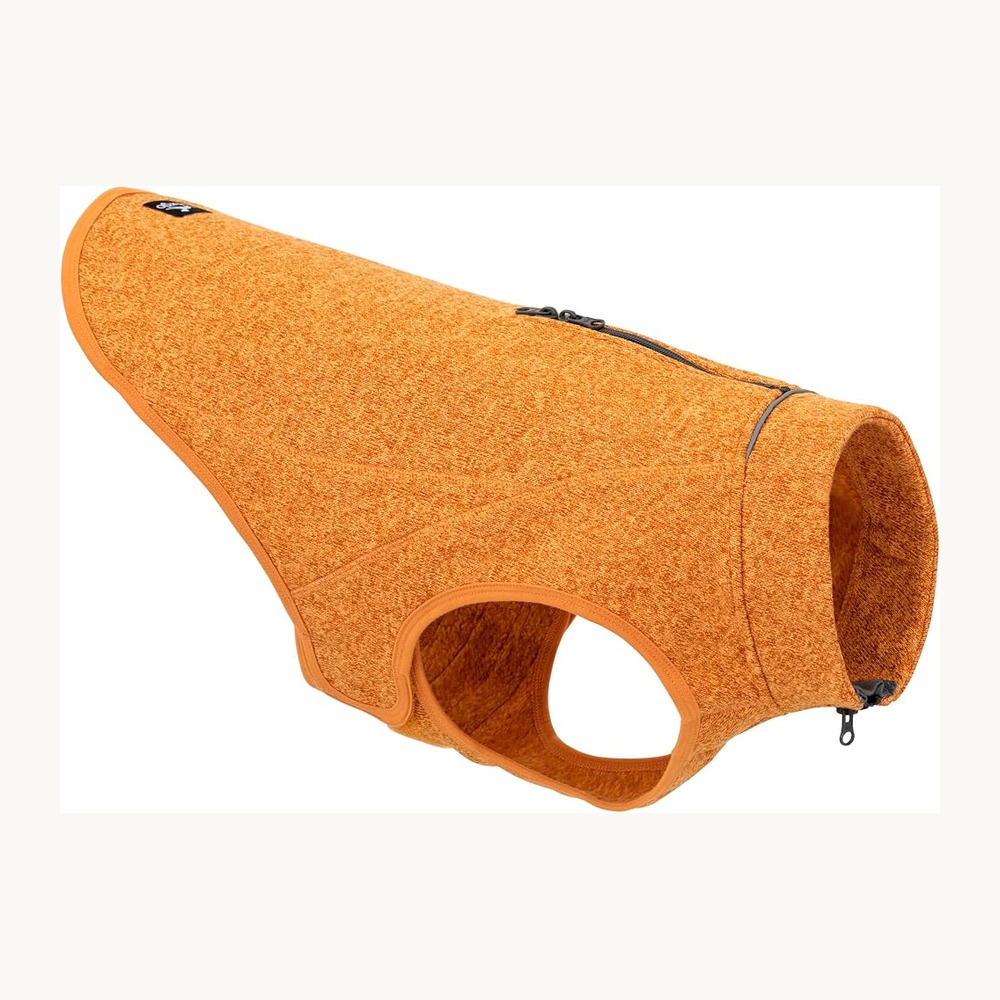 No. 03
Kurgo K9 Core Sweater
Best for: medium and large dogs who need a warm base layer
A fleece sweater designed to wear alone on cool days or under a jacket. It is rated 4.6 stars across roughly 700 reviews on Chewy. Kurgo itself pairs it with its Loft jacket, and one owner reports it runs a little large.
Buy on Amazon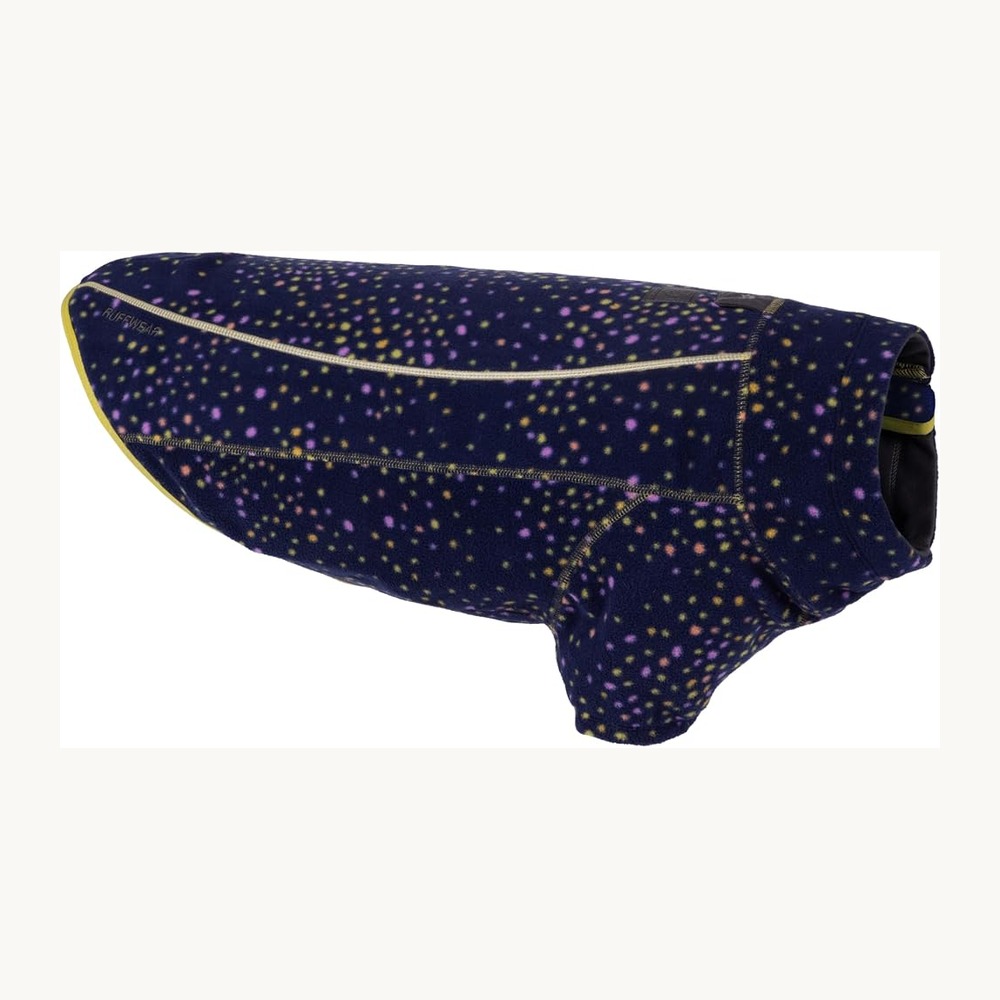 No. 04
Ruffwear Climate Changer Fleece Jacket
Best for: active, short-coated dogs on cool, dry mornings
A full-zip fleece with sleeves, made of recycled polyester and built to be worn alone or under a shell. A tester at Dog Gear Review describes it as a breathable option for chilly, dry conditions. It is not for rain, and Ruffwear pricing sits above most of this list, but owners of thin-coated dogs give it consistently warm reviews.
Buy on Amazon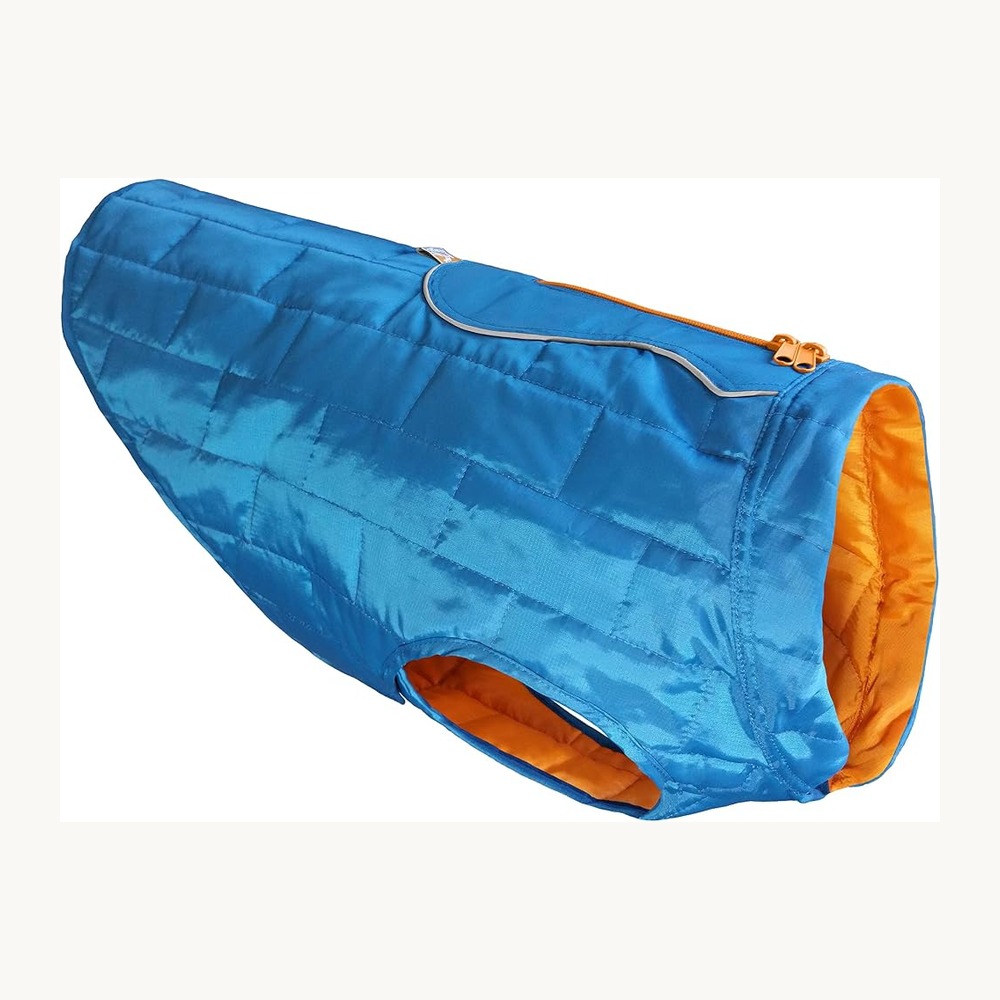 No. 05
Kurgo Loft Jacket
Best for: wind and light damp on days too cool for fleece alone
A reversible jacket in water-resistant ripstop with light fill and a two-way zipper for harness access. It is rated about 4.5 stars across roughly 400 reviews at Walmart. Owners like that it is warm without bulk. The recurring complaint is sizing, with some finding the coverage short at the neck or rump, so check your dog's chest and back length against the chart.
Buy on Amazon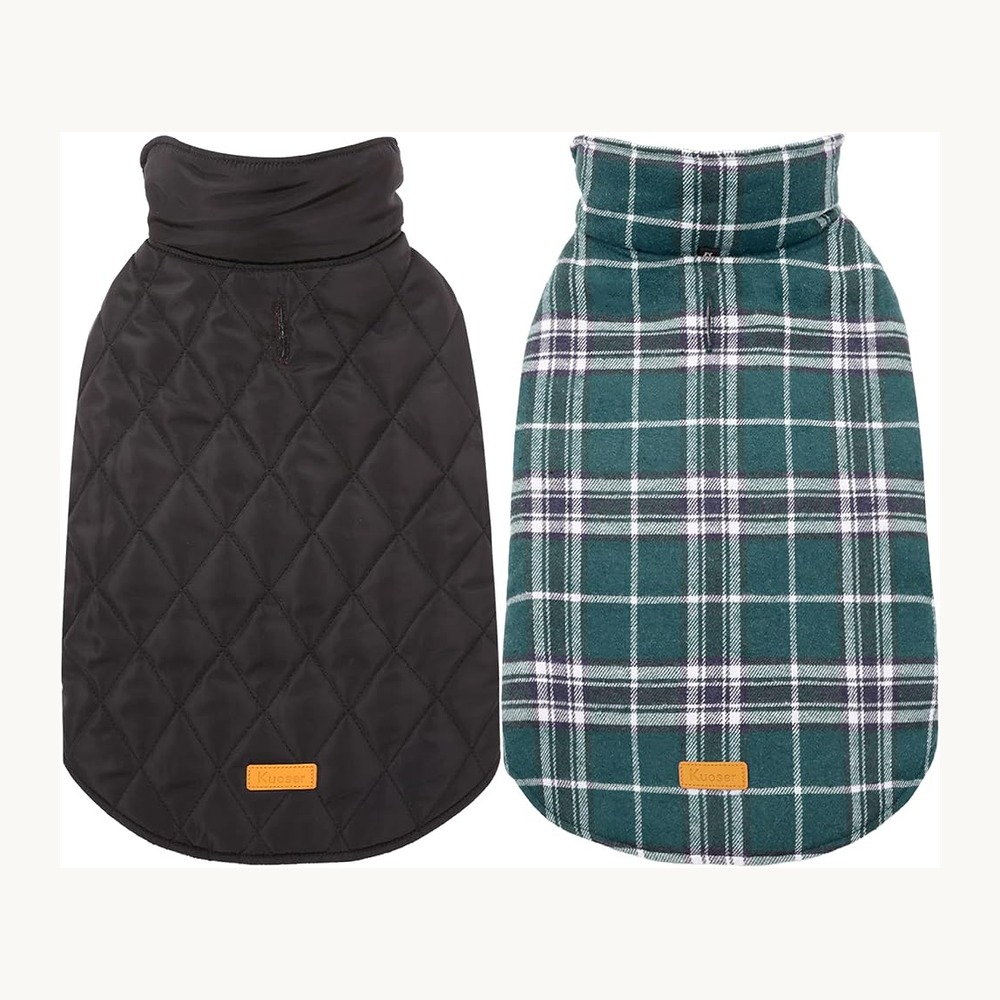 No. 06
Kuoser Reversible Waterproof Dog Coat
Best for: the coldest, wettest autumn days, on a budget
The warmest piece on this list: fleece-lined and waterproof, with a reversible plaid design, in sizes from extra-small to triple extra-large. It is widely reviewed and rated around 4.4 on Walmart. Some owners of small male dogs say the belly flap sits too long, so it suits later autumn better than an early cool spell.
Buy on Amazon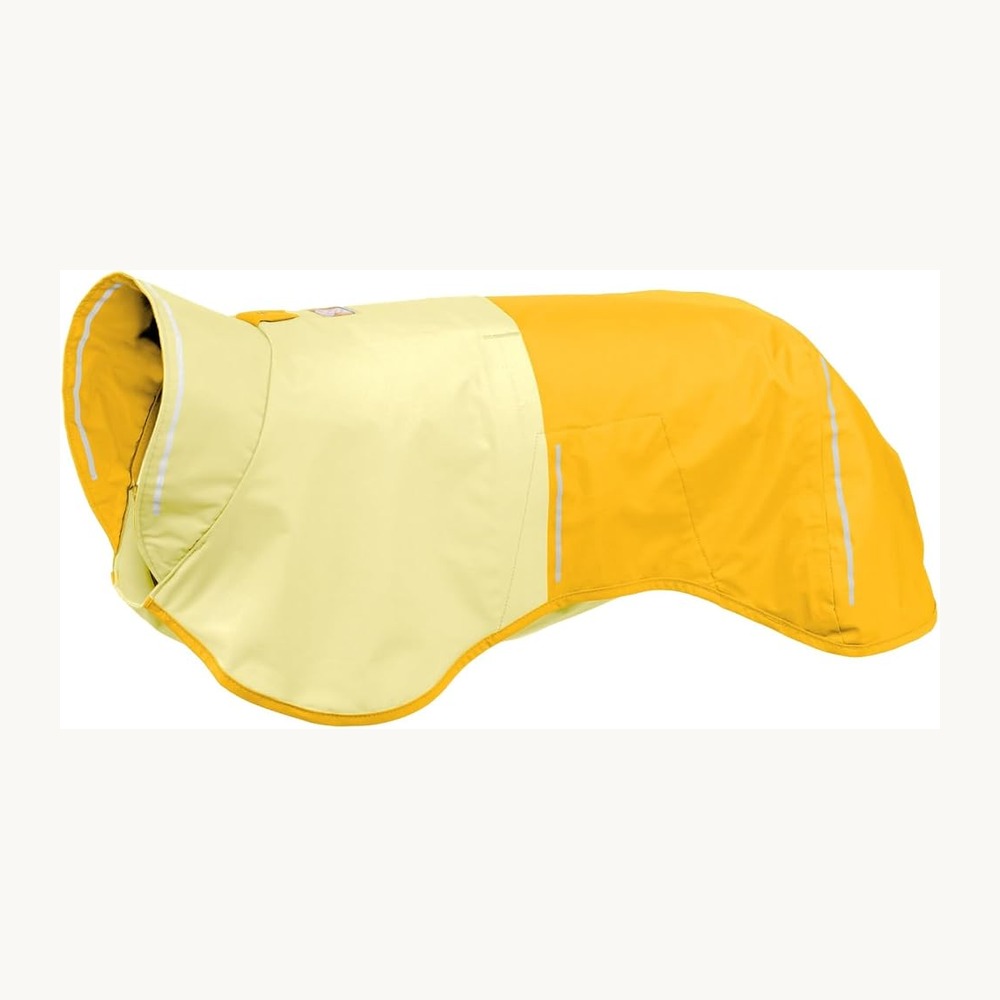 No. 07
Ruffwear Sun Shower Raincoat
Best for: rainy days, and dogs who overheat under insulation
A lightweight waterproof and windproof shell with leg loops, a harness portal and reflective trim. Treeline Review named it its best affordable dog raincoat after testing it on several dogs, and Dog Gear Review points out that, because it is not insulated, it works for dogs with heavy coats who run hot. The buckles sit in hidden pockets and can be fiddly on a wiggly dog.
Buy on Amazon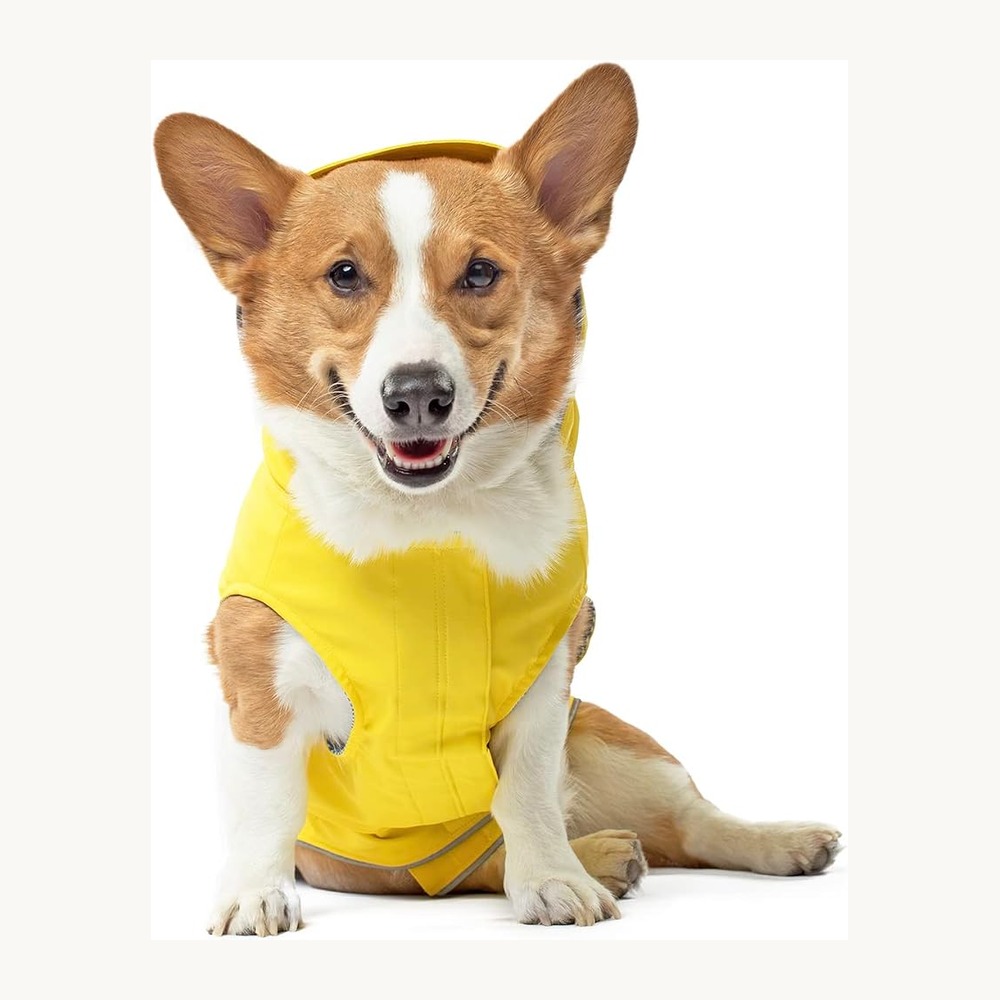 No. 08
Canada Pooch Torrential Tracker
Best for: small, low-to-the-ground dogs in wet weather
Full belly coverage and a soft lining, sold in sizes from 7 to 29 inches. Treeline Review named it its best raincoat for small dogs. It takes a little effort to put on, since each front leg goes through and it fastens underneath, and it can be roomy on thin dogs, which lets moisture in at the armholes.
Buy on Amazon
A warm walk, either way
If your dog is comfortable without a layer, that is a perfectly good answer. For more carefully chosen essentials, see our dog harness buying guide or browse gifts for dog lovers.
References
Breed, age and fit guidance in this piece comes from the sources below. They are general information, not a substitute for your own vet's advice about your dog.
Which dogs need a coat
- American Kennel Club, Does My Dog Need a Winter Coat?
- PetMD, Do Some Breeds Actually Need Dog Coats?
- Small Door Veterinary, Does My Dog Need a Coat in Winter?
- Rover, Do Dogs Need Coats? Experts on the Pros and Cons
- Dogster, Do Dogs Need Coats in the Winter? Vet-Approved Care Facts
- DogHealth.com, How to Tell If Your Dog Needs a Sweater
Signs your dog is cold
Puppies and senior dogs