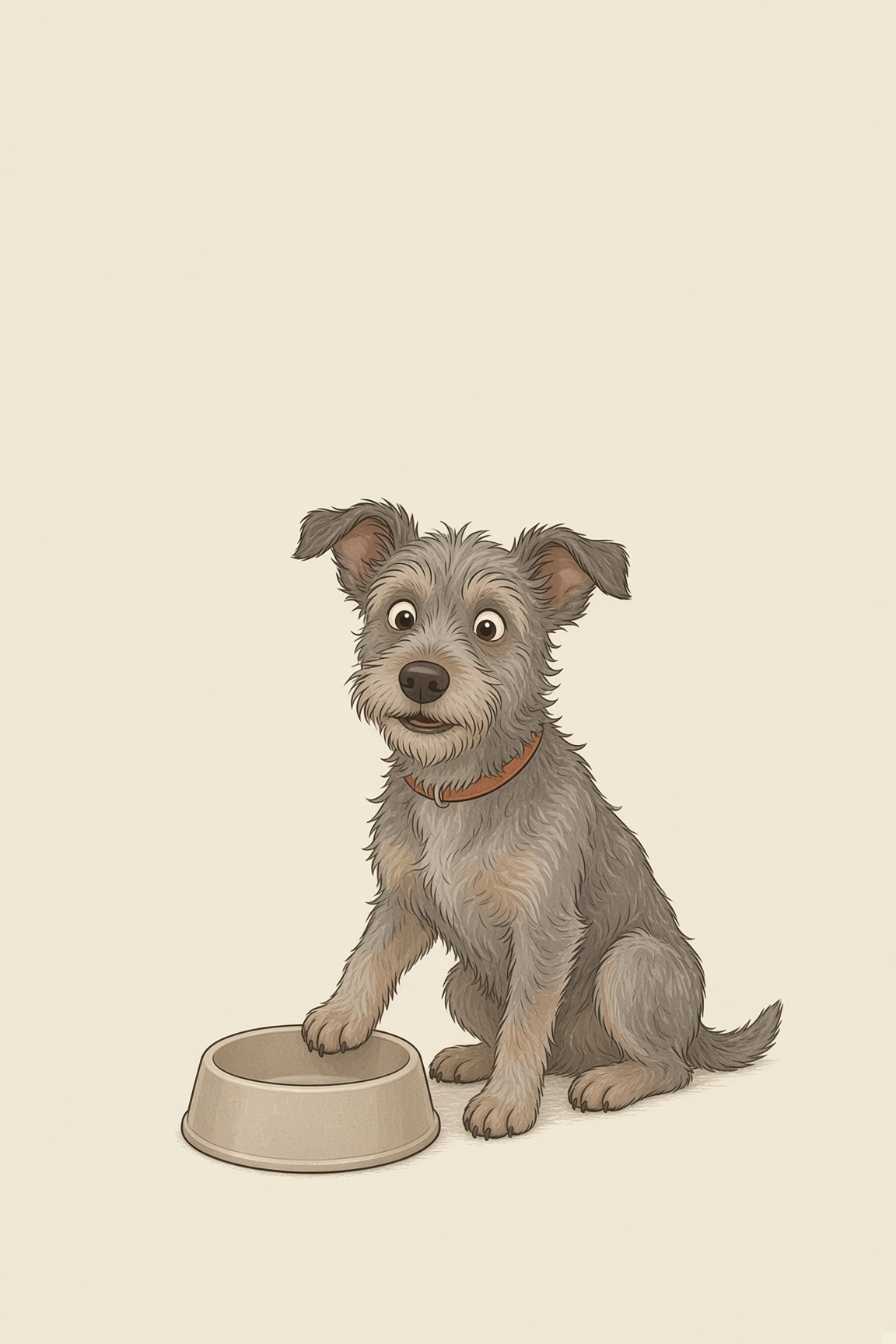
Mocca steals food shamelessly and without remorse, according to her own official bio, and if your dog does the same, you're in extremely good company. Dogs acting hungry five minutes after a full meal is one of the most universal dog experiences there is. Some of the explanation goes back further than you'd expect, and for one particular breed, some of it is written directly into the genes.
Some of it is just leftover instinct
According to Dr. Rebecca Remillard, a veterinary nutrition consultant with the American College of Veterinary Nutrition, dogs are, at their core, opportunistic scavengers, and given the chance, would eat everything in sight. That instinct has a real evolutionary logic behind it. A peer-reviewed paper in the Journal of Nutrition traces fast, opportunistic eating back to wolf pack feeding hierarchies, where pack leaders ate first and everyone else had to compete for what was left. Dogs that ate quickly and grabbed what they could got fed. Dogs that didn't, sometimes didn't.
That pressure mostly doesn't exist anymore, but the instinct never got the memo. A full bowl in a safe kitchen still gets approached like it might be taken away any second, because for most of dog history, it might have been.
It's also just a different animal than a cat
If you've ever lived with both, you already know the contrast: a dog treats every meal like a competitive event, while plenty of cats will walk away from a full bowl and finish it later. The same Journal of Nutrition research traces this back to genuinely different ancestral strategies. Dogs descend from wolves, pack hunters who occasionally made a large kill and had to eat as much of it as fast as possible before it was gone. Cats descend from a largely solitary hunter, the African wildcat, who caught many small prey items throughout the day rather than one big meal, so there was never the same evolutionary pressure to gorge.
Diet plays a role too. Cats are obligate carnivores with narrow, specific nutritional needs, while dogs are opportunistic omnivores who adapted to scavenge whatever was available, meat, scraps, or otherwise. Cats also have a more sensitive gut and less acidic stomach acid, which makes them warier of food that's past its prime. Dogs generally have a hardier digestive tract built for exactly the kind of gamble that scavenging requires, which is also, unfortunately, why dogs sometimes eat the questionable things they eat.
For some dogs, it's actually in the genes
This part is specific to one breed, but it's a genuinely remarkable piece of research. A 2024 University of Cambridge study, led by Dr. Eleanor Raffan, found that around 25% of Labrador Retrievers, and roughly two-thirds of Flat-Coated Retrievers, carry a mutation in a gene called POMC. According to VCA Animal Hospitals, this gene is responsible for producing two proteins involved in telling the brain a meal is over. In dogs with the mutation, that signal doesn't come through properly, so the brain never quite gets the message that dinner happened.
The nuance worth knowing: this doesn't mean affected dogs need more food to feel full in the moment, the study found they eat roughly the same amount as any other dog at a given meal. What it means is they get hungry again faster afterward, and to make matters harder, the same research found these dogs burn about 25% less energy at rest than dogs without the mutation. Hungrier, sooner, on fewer calories needed. It's not greed. It's a wiring problem, and it's been directly measured in a lab.
This mutation has only been confirmed in Labradors and Flat-Coated Retrievers so far, tested for and not found in roughly forty other breeds, so it doesn't explain every food-obsessed dog out there. But if you've ever wondered why your Lab acts like they've never been fed a day in their life, there's now real science behind that particular brand of drama.
When it's worth mentioning to a vet
Ordinary food motivation is normal. A sudden, dramatic increase in hunger, especially paired with weight loss, increased thirst, or a change in energy, is a different story, and can point to something like diabetes or a thyroid issue rather than plain appetite. That's a conversation for your vet, not a training problem to solve on your own.
For the rest of us with a merely food-obsessed dog rather than a medical mystery: the begging isn't a character flaw. It's a few hundred thousand years of instinct, occasionally with a genetic assist, aimed at a food bowl that was never actually going anywhere.
For more on what dogs are telling us, see whether dogs really love us, why they get the zoomies, and why they do that.
And for more like this (warm, useful, dog-obsessed), visit my newsletter The Goodest Place, where it all lands first.